What is the Metaverse?
With Facebook renaming the company to Meta in 2021 (Click to read Meta article). We have been exposed to many new realities and constantly been hearing about the Metaverse, but what is it? Why are people talking about it? Does it impact me?
The Metaverse is a broad term that encompasses a collection of immersive, three-dimensional (3D) worlds that facilitate virtual interaction between individuals. It includes virtual reality, artificial intelligence, and augmented reality, which combines characteristics of the digital and physical worlds. Many futurists believe it to be a trillion-dollar market in the next decade. These worlds are easily accessible from your phones, laptops, and gaming consoles. A prime example would be Fortnite, as users can make in-game purchases in the form of NFTs, socialise and play games. However, that is just a portion of the Metaverse’s full potential.
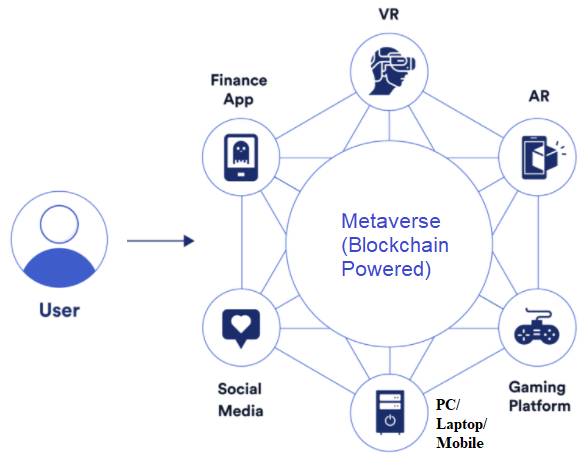
The Head of Meta’s Reality labs promises that users will be able to handle virtual objects with natural hand motions and talk vocally to other users’ avatars as though they are interacting in real life. This will allow users’ avatars to reflect their genuine facial expressions and make natural eye contact with the avatars of others so that they will have a visual sense of people’s genuine emotions even in the Metaverse.
What you need to understand is why? The Metaverse is the beginning of the long-anticipated Web 3.0. youngsters yearn for a decentralised lifestyle different from the hardships that their elders faced. The youth somehow also developed social anxiety; many could argue that it is because of the increase in video games and less time outside. Nonetheless, they feel more comfortable behind a screen. Web 3.0 promises to be immersive, tactile, and decentralised due to the emergence and confluence of several technological trends. Virtual and augmented reality are not the only contributors to web 3.0. 5G networks, blockchain, cryptocurrencies, and eventually, human augmentation such as digital wearables and even microchips that can be implanted in your brains are becoming extremely popular.
Beyond tech giants, large brands have been making their way into the Metaverse. Fashion heavyweight Gucci launched a virtual gallery, and Nike has acquired RTKFT- a company that creates virtual products- to sell Nike-themed attire in the Metaverse exclusively. Megabank JP Morgan recently opened a building in Decentraland. This is a wake-up call for businesses to gear their business plan to include augmented reality in the future; otherwise, they are digging their own grave.

So how does this futuristic fantasy affect you today? Five years ago, if I told you that you could complete a year of school via a video call or work from your bedroom for an international corporation, you would have laughed at me. However, here we are. There are many advantages and disadvantages to the Metaverse, and still, we are yet to discover so much. However, some applications of the Metaverse are currently incorporated into our daily lives. Some include.
• Real estate: Marketplaces in a virtual world such as ‘Decentraland’ and ‘SandBox’ helps to buy, sell, and develop virtual plots of land. These plots can be developed to your liking, with resources from your wildest dreams at your fingertips.
• Education: Most scholars are familiar with conducting classes online. Many would argue that sitting and learning from your bedroom is not as productive as in the classroom. Therefore, in the Metaverse, one can feel like a real classroom with colleagues and friends in school while being in your bedroom.
• Work: Colleagues can meet, interact, and conduct business if they are in the same room or space. This can lower absenteeism and increase productivity as all members access the latest technology and most productive environments.
• Events: Virtual events, concerts, and conferences can be organised using NextMeet and VRXtream. You could attend a conference in Australia and attend a carnival with your family in Europe immediately after that. This will bring people closer without having to leave your room.
• Healthcare: Imparts consultations, training, and counselling to medical students with the help of a holographic model. It can also be helpful to conduct international consultations without needing to fly across the world for an examination.
• Retail: Virtual shopping stores offer the best shopping experience without physically visiting the store. Shoppers can visit the store virtually and buy the items of choice either for their avatars or reality. In the Metaverse, these items can be sold as NFTs, and then you can finally be sure that you are the only person to own this unique garment.
The possibilities are endless, and as time passes, we get closer to augmented reality for millions of people to utilise. Are you going to be part of the Metaverse, or will you watch the fun unravel from the back seat?
Financial Disclaimer: The Content is for informational purposes only; you should not construe any such information or other material as legal, tax, investment, financial, or other advice. Nothing in this post constitutes a solicitation, recommendation, endorsement, or any third-party service provider to buy or sell any securities or other financial instruments in this jurisdiction. Such solicitation or offer would be unlawful under the securities laws of such jurisdiction. All Content on this site is information of a general nature and does not address the circumstances of any particular individual or entity. Nothing on the Site constitutes professional and financial advice, nor does any information on the site includes a comprehensive or complete statement of the matters discussed or the law relating to that.
Share this article! 


